
What you will discover:
- What an Ethereum wallet really is and why it matters
- How digital wallets store your crypto treasures
- The difference between wallets, keys, and passwords
- Common mistakes crypto users make
- Why your Ethereum wallet might be the smartest thing you own
Imagine a wallet that never gets lost in your washing machine, never contains old shopping receipts, and never becomes suspiciously empty after a weekend trip. Welcome to the world of the Ethereum wallet — a digital pocket designed for the internet age.
Unlike your classic leather wallet that carries coffee cards and forgotten coins, an Ethereum wallet stores something much more mysterious: digital assets, blockchain addresses, and the keys that prove you are the boss of your crypto kingdom.
Of course, it does not actually sit in your pocket. It does not wear tiny sunglasses or complain about being too full. But in the crypto universe, an Ethereum wallet is your personal gateway to the world of decentralized finance, NFTs, and blockchain adventures.
What Is an Ethereum Wallet?
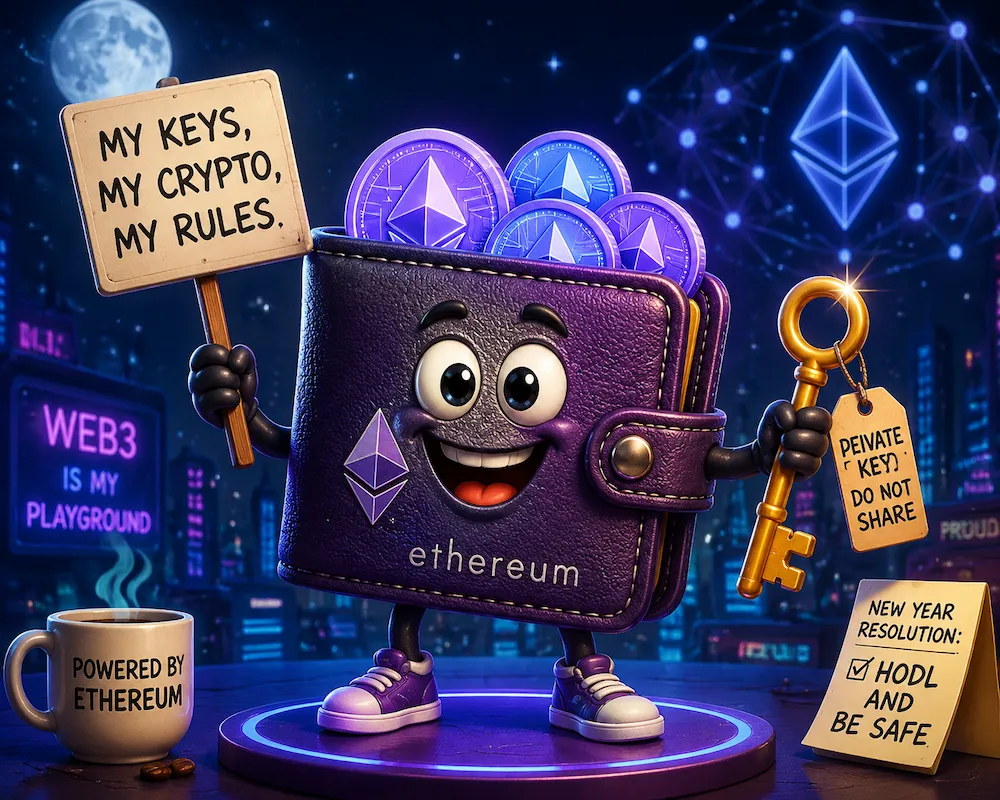
An Ethereum wallet is a digital tool that allows users to manage their Ethereum (ETH) and interact with the Ethereum blockchain. Think of it as your personal control center for everything related to Ethereum.
But here is the funny part: your Ethereum wallet does not actually store your coins.
Yes, the wallet has been keeping a secret from you.
Your ETH is not sitting inside a digital suitcase waiting for you to open it. Instead, your cryptocurrency exists on the blockchain — a giant public network that records transactions. Your wallet simply stores the information needed to access and manage your assets.
It is more like having the key to a treasure chest rather than carrying the treasure itself.
How Does an Ethereum Wallet Work?
Every Ethereum wallet has two important elements:
Public Address: Your Crypto Mailbox
The public address is like your email address. You can share it with others when someone wants to send you Ethereum.
It usually looks like a long combination of letters and numbers that seems like a robot accidentally fell asleep on the keyboard.
For example:
0x742d…something…
Nobody expects humans to memorize these addresses. If someone says they know their Ethereum address by heart, they are either a blockchain genius or someone who needs a new hobby.
Private Key: The Ultimate Secret
The private key is the most important piece of information in your wallet.
It works like the password to your crypto kingdom. Whoever has the private key can access the funds connected to that wallet.
This is why crypto users often say:
“Not your keys, not your coins.”
The blockchain does not care if you forgot your password, lost your notebook, or accidentally deleted your notes app. There is no customer support wizard who appears with a magical “restore my wallet” button.
The responsibility is yours.
Types of Ethereum Wallets
Not all wallets are created equal. Some are designed for convenience, while others focus on maximum security.
Software Wallets
Software wallets are applications or browser extensions that allow users to manage Ethereum quickly.
They are popular because they are easy to use and perfect for everyday crypto activities.
They are like a smartphone app for your money — always available, always connected, and occasionally making you nervous when you check your balance.
Hardware Wallets
Hardware wallets are physical devices designed to protect crypto assets offline.
They are often considered one of the safest options because they keep private keys away from online threats.
Basically, they are tiny computers whose only job is protecting your digital treasure.
A hardware wallet does not play games, watch videos, or scroll social media. It simply sits there like a serious little crypto bodyguard.
Paper Wallets
Paper wallets store wallet information on a physical document.
They are simple but require careful handling. A spilled coffee or a misplaced piece of paper can create a very stressful crypto adventure.
Why Do People Need an Ethereum Wallet?
The Ethereum ecosystem has grown far beyond simply buying and holding ETH.
With an Ethereum wallet, users can interact with:
- Decentralized applications (dApps)
- NFT marketplaces
- Blockchain games
- Decentralized finance platforms
- Smart contracts
Your wallet becomes your passport to the Ethereum world.
Without it, exploring Web3 is like arriving at an amusement park without a ticket. You can look at the rides, but you are not getting on the roller coaster.
Common Ethereum Wallet Mistakes
Even experienced crypto users sometimes make mistakes.
Sharing Private Information
Your private key and recovery phrase are not something to share.
Not with strangers.
Not with “crypto experts” in your messages.
Not with someone promising to double your Ethereum overnight.
The internet is full of people wearing digital disguises and pretending to be your friendly blockchain neighbor.
Losing Your Recovery Phrase
Your recovery phrase is usually a series of words that can restore access to your wallet.
Treat it like a priceless treasure map.
Except this map should not be photographed, uploaded online, or stored in a random cloud folder called “Important Stuff.”
Sending Crypto to the Wrong Address
Ethereum transactions are usually irreversible.
A typo can turn your ETH into a permanent donation to a stranger’s wallet.
The blockchain is powerful, but it is not a time machine.
The Future of Ethereum Wallets
Ethereum wallets continue to evolve. Modern wallets are becoming easier to use, more secure, and more connected with everyday digital experiences.
In the future, wallets may become much more than crypto storage tools. They could act as digital identities, payment systems, and personal gateways to online services.
The old wallet in your pocket carries memories like receipts and loyalty cards.
The Ethereum wallet carries something completely different: access to a new digital economy.
FAQ
Is an Ethereum wallet free?
Many Ethereum wallets are free to download and use. However, blockchain transactions usually require network fees known as gas fees.
Can an Ethereum wallet be hacked?
Like any digital tool, wallets can face security risks. Using strong security practices and protecting private keys reduces the chances of losing access.
Does an Ethereum wallet store Ethereum?
No. Ethereum remains on the blockchain. The wallet stores the keys needed to access and manage your assets.
What is the safest Ethereum wallet?
Hardware wallets are often considered among the safest options because they store private keys offline.
An Ethereum wallet may not look impressive, make coffee, or tell jokes at parties, but it plays one of the most important roles in the crypto world. It is your personal key to blockchain adventures — just remember to protect it better than you protect your old wallet full of expired coupons.