
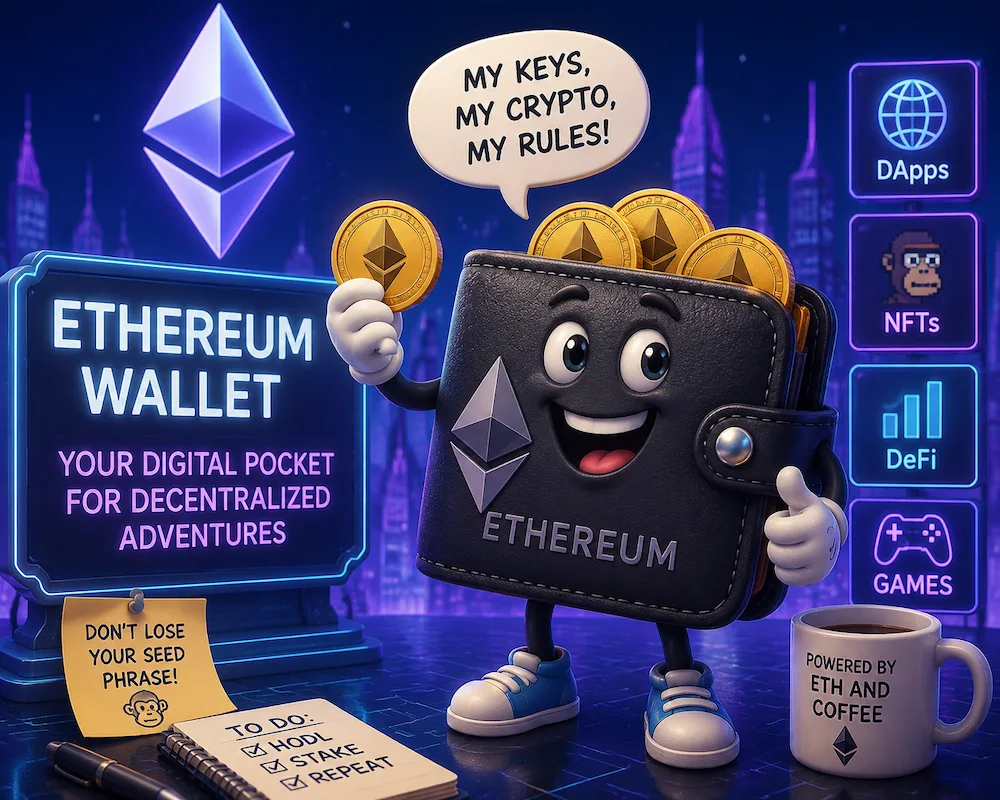
Quick Summary
An Ethereum wallet is one of the most important tools in the crypto world. It stores your keys, connects you with blockchain applications, and helps you manage ETH and other digital assets. But unlike a traditional wallet, it will not get lost under your sofa, accidentally washed with your jeans, or stolen by a curious dog. It has its own challenges — mostly involving passwords, security, and remembering that “password123” is not a serious protection strategy.
What Is an Ethereum Wallet and Why Does Everyone Need One?
Imagine having a wallet that does not contain bank cards, receipts, old coffee shop coupons, and mysterious pieces of paper you have no idea why you kept. That is basically an Ethereum wallet.
An Ethereum wallet is a digital tool that allows users to interact with the Ethereum blockchain. It does not actually store coins inside like a physical wallet stores cash. Instead, it stores private keys — special codes that prove ownership of your crypto assets.
Your ETH exists on the blockchain. Your wallet simply gives you the ability to access it, send it, receive it, and use it.
Think of it as a magical remote control for your cryptocurrency. The only difference is that if you lose the remote, there is no customer service department saying: “No problem, we will send you a new one tomorrow.”
How Does an Ethereum Wallet Work?
The technology behind wallets may sound complicated, but the basic idea is simple.
When you create an Ethereum wallet, you receive:
- A public address — similar to an email address where people can send you crypto.
- A private key — a secret code that proves you own the funds.
- A recovery phrase — a backup list of words that can restore your wallet.
The public address can be shared. The private key and recovery phrase should be protected like a dragon protects its treasure.
Posting your wallet address online is usually fine. Posting your recovery phrase because you want to “show your crypto setup” is a little like posting your house keys on social media and asking people not to enter.
Types of Ethereum Wallets
Not all wallets are created equal. The crypto world offers several options depending on how much convenience and security you want.
Software Wallets
Software wallets are applications installed on computers or smartphones. They are popular because they are easy to use and convenient for everyday transactions.
They are great for beginners who want quick access to their Ethereum assets. However, because they are connected to the internet, users need to pay attention to security.
A software wallet is like keeping money in your pocket — convenient, but you probably should not walk around a crowded city waving it in the air.
Hardware Wallets
Hardware wallets are physical devices designed to keep private keys offline.
They are often chosen by users who store larger amounts of cryptocurrency. They provide an additional security layer because hackers cannot simply attack a device that is not connected to the internet.
It is basically a tiny crypto vault. Unfortunately, it will not look as impressive as a bank vault from an action movie.
Web Wallets
Web wallets work directly through browsers and allow users to connect with decentralized applications.
They are useful for interacting with the Ethereum ecosystem, including decentralized finance platforms, NFT marketplaces, and blockchain games.
The main rule is simple: always check that you are using the correct website. Crypto scammers have a talent for creating websites that look almost identical to the real ones.
Why Security Matters More Than Ever
Owning an Ethereum wallet comes with responsibility. There is no bank employee who can freeze a suspicious transaction, call you, and ask if you really meant to send your money away.
Once a blockchain transaction is confirmed, it is usually permanent.
Good wallet habits include:
- Keeping your recovery phrase offline.
- Using strong passwords.
- Enabling additional security features when available.
- Avoiding suspicious links and messages.
- Checking transaction details before confirming.
Remember: in crypto, your wallet is smart, but it cannot protect you from clicking a button that says “Congratulations, claim free 500 ETH.”
Ethereum Wallets and Everyday Crypto Life
Modern Ethereum wallets are not only for storing coins. They are becoming gateways to the entire blockchain universe.
With an Ethereum wallet, users can:
- Send and receive ETH.
- Buy and trade digital assets.
- Explore decentralized applications.
- Collect NFTs.
- Participate in blockchain projects.
It is like having a passport to a digital country where the currency changes quickly and everyone talks about gas fees.
Common Ethereum Wallet Mistakes
Even experienced crypto users sometimes make simple mistakes.
Some common examples include:
- Forgetting where the recovery phrase was stored.
- Sending crypto to the wrong address.
- Approving unknown applications.
- Using the same password everywhere.
The blockchain may be advanced technology, but human mistakes remain surprisingly traditional.
Final Thoughts: Your Crypto Pocket Needs Care
An Ethereum wallet is more than just a place for digital coins. It is your personal connection to the Ethereum ecosystem.
Choosing the right wallet and using good security habits can make your crypto experience safer and more enjoyable.
Just remember: your Ethereum wallet may be digital, but the responsibility behind it is very real. Treat it carefully, protect your keys, and never trust a random internet stranger promising unlimited free crypto. Even if they use a very professional-looking profile picture.