
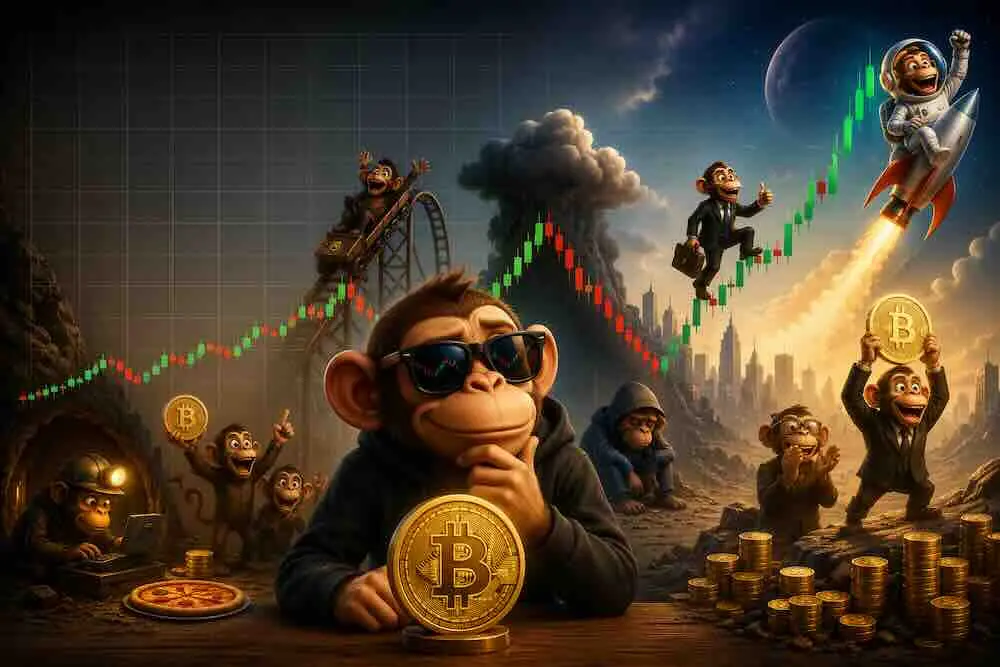
Bitcoin price history is not just a chart. It is a soap opera with math, caffeine, broken keyboards, and people saying “this is definitely the top” right before opening another price app.
If traditional finance is a serious man in a grey suit, bitcoin is his cousin who arrives at dinner on a skateboard, talks about decentralization, and somehow pays for dessert.
So let’s walk through the glorious, ridiculous journey of bitcoin: from internet experiment to global market celebrity with more mood swings than a cat near a cucumber.
The early days: when bitcoin was basically nerd confetti
In the beginning, bitcoin was not discussed on business channels by people wearing expensive watches. It lived in forums, code repositories, and the minds of people who could explain cryptography at parties — which is usually how parties end.
Back then, bitcoin had almost no market price. It was an idea first, a network second, and a “wait, this thing is worth money?” moment much later.
The famous pizza story became crypto folklore: bitcoin was used to buy two pizzas, and the world gained both a historical transaction and a permanent reason to cry into mozzarella.
At that time, nobody was saying, “I am diversifying into digital assets.” They were saying, “Cool, internet coins.”
The first real price jumps: confidence meets confusion
As more people discovered bitcoin, the price began to move. Slowly at first. Then suddenly, like a shopping cart with one broken wheel.
Early buyers had to deal with strange exchanges, wallet backups, forgotten passwords, and the constant feeling that they were either geniuses or participants in the world’s most technical prank.
When bitcoin reached $1, it was a milestone. When it reached $10, people blinked. When it reached $100, the internet started whispering. By $1,000, even skeptical uncles began asking, “So how does this coin thing work?”
The answer, of course, usually took 45 minutes and convinced nobody.
2017: the year bitcoin became dinner-table chaos
The 2017 bull run was bitcoin’s first global talent show. Suddenly, everyone had an opinion. Taxi drivers, cousins, office managers, gym trainers — all became market analysts with strong views and suspiciously new accounts on crypto exchanges.
Bitcoin climbed toward $20,000, and the mood changed from curiosity to full jungle drums. People discovered terms like “HODL,” “FOMO,” and “I should have bought earlier,” which remains the official anthem of crypto.
Then came the correction. Because bitcoin price history is generous: it gives excitement first, then teaches risk management with a hammer.
Many newcomers learned an important lesson: a chart going up fast can also go down fast. Gravity works on digital assets too, apparently.
The bear markets: where optimism goes to wear a hoodie
After every major bitcoin rally, there has usually been a colder season. Prices fall, headlines turn dramatic, and people who were posting rocket emojis suddenly become long-term philosophers.
Bear markets are where bitcoin investors develop character. Also eye twitches.
Yet these periods are important. They shake out hype, reduce noise, and remind everyone that bitcoin is not a magic vending machine. It is a volatile asset with a limited supply, global demand, regulatory attention, and enough emotional drama to fill a streaming series.
The funny part? During every crash, someone announces that bitcoin is “dead.” Bitcoin has been declared dead so many times it should have its own cemetery, gift shop, and loyalty card.
Halvings: bitcoin’s scheduled diet plan
One reason bitcoin price history attracts attention is the halving cycle. Roughly every four years, the amount of new bitcoin rewarded to miners is reduced. In simple terms, bitcoin goes on a supply diet.
Markets love stories, and halvings provide a good one: fewer new coins entering circulation, while demand can rise, fall, or do interpretive dance.
Historically, halvings have often been followed by major market interest. But they are not magic buttons. The price does not receive a calendar invite saying, “Please pump at 9 AM.”
Instead, halvings become part of the bigger picture: supply, demand, liquidity, investor sentiment, regulation, macro trends, and whether the internet feels optimistic this week.
2020–2021: institutions entered the chat
The next major chapter brought a different mood. Bitcoin was no longer just a rebel internet asset. Public companies, funds, and larger investors started paying attention.
The price moved to new highs, and bitcoin became a regular topic in mainstream finance. This was the era when “digital gold” became a common phrase, usually spoken by someone standing in front of a chart that looked like a mountain range designed by caffeine.
Of course, the market later corrected again. Because bitcoin never lets confidence become too comfortable.
The ETF era and new records
More recently, bitcoin gained another layer of market legitimacy through spot ETF approvals and stronger institutional access. This changed how many investors could approach bitcoin without managing wallets or private keys themselves.
Price history kept expanding with new records, new debates, and new predictions. Some people saw maturity. Others saw another cycle. Crypto Twitter saw an opportunity to post 900 charts before breakfast.
The lesson remains the same: bitcoin can be historic, innovative, and wildly volatile at the same time. These qualities are not contradictions. They are basically its personality.
What bitcoin price history teaches us
Bitcoin’s past is not a crystal ball, but it does offer useful lessons.
First, volatility is normal. If bitcoin were a person, it would not walk calmly into a room. It would kick the door open, apologize, and then become the main topic of conversation.
Second, narratives matter. Pizza, halvings, ETFs, inflation fears, institutional adoption, regulation — each chapter has helped shape demand and attention.
Third, patience has often mattered more than panic. People who treat every red candle as a personal insult usually suffer more than those who understand cycles.
Finally, bitcoin price history shows that markets are emotional machines. They run on data, liquidity, fear, hope, memes, and occasionally one billionaire’s comment.
Final thoughts: the chart with a sense of humor
Bitcoin price history is a story of experiments becoming assets, jokes becoming portfolios, and tiny internet coins becoming global financial headlines.
It has crashed, recovered, surprised critics, humbled believers, and confused everyone at least once. That is part of the charm.
So the next time you look at a bitcoin chart, remember: you are not just seeing numbers. You are watching financial history written by code, markets, and millions of people refreshing their screens like it owes them an explanation.
And honestly, sometimes it does.